
Inside the Craft: How Authentic Kasavu Sarees Are Handwoven
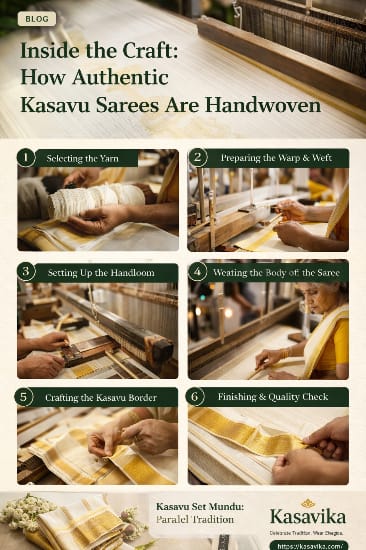
The elegance of a kasavu saree is easy to admire—but understanding the craftsmanship behind it reveals a much deeper story. Authentic handloom kasavu sarees are not mass-produced textiles; they are the result of skill, patience, and generations of weaving expertise rooted in Kerala’s cultural heritage.
This article takes you inside the craft—step by step—to show how a traditional kasavu saree Kerala style is brought to life.
The Origins of Kasavu Weaving
Kasavu sarees have long been associated with Kerala’s traditions, especially festivals and weddings. Historically, the signature golden border—known as “kasavu”—was woven using real gold or silver threads. While modern versions often use zari, the essence of the design remains unchanged.
Authentic handloom kasavu sarees are typically woven in regions known for their weaving communities, where the knowledge is passed down through families. This continuity ensures that each saree carries both technical precision and cultural authenticity.
Step 1: Selecting the Right Yarn
The process begins with choosing high-quality cotton yarn. For a Kasavu Saree pure cotton kasavu saree, the yarn must be soft, strong, and breathable. This is essential not only for comfort but also for achieving the saree’s characteristic drape.
In some premium kasavu saree variations, silk or cotton-silk blends may be used to add richness. However, traditionalists often prefer pure cotton for its authenticity and suitability to Kerala’s climate.
Step 2: Preparing the Warp and Weft
Once the yarn is selected, it is carefully dyed (if required) and prepared for weaving. The threads are stretched and arranged on a loom to form the warp (vertical threads), while the weft (horizontal threads) is wound separately.
This stage requires precision. Even a minor misalignment can affect the final texture and durability of the saree. For handloom kasavu sarees, this preparation is done manually, which adds to the uniqueness of each piece.
Step 3: Setting Up the Handloom
The loom is where the transformation truly begins. Traditional handloom set mundu and sarees are woven on manually operated looms that require constant attention and coordination.
The weaver sets the design, including the width of the border and any additional patterns. For a classic Kasavu saree with golden border, the border placement is crucial—it must be even, symmetrical, and tightly woven.
Step 4: Weaving the Body of the Saree
The body of the saree is woven first using fine cotton threads. This creates the signature off-white or ivory base that defines kasavu sarees for women.
The weaving process is slow and deliberate. A single saree can take several days to complete, depending on the complexity of the design. This is one of the key differences between handloom and machine-made sarees—handloom weaving prioritizes quality over speed.
Step 5: Crafting the Kasavu Border
The golden border is the defining feature of the saree. Traditionally, this was made using real gold thread, but today it is commonly crafted using high-quality zari.
For designer kasavu sarees or kasavu saree bridal collections, the border may include intricate motifs such as temple patterns, floral designs, or geometric shapes. The weaver carefully integrates the zari into the fabric, ensuring durability and a clean finish.
Step 6: Finishing and Quality Check
After weaving, the saree undergoes finishing processes such as washing, drying, and ironing. Each piece is inspected for consistency, strength, and overall appearance.
Authentic handloom products may show slight variations—these are not defects but indicators of manual craftsmanship. A premium kasavu saree will have a smooth texture, well-defined borders, and no loose threads.
Kasavu Set Mundu: A Parallel Tradition
Alongside sarees, the kasavu set mundu holds equal cultural importance. A traditional set mundu Kerala style consists of two pieces and is woven using similar techniques.
Handloom mundu set options are widely preferred for their comfort and authenticity. Today, many people also explore kasavu mundu online to access both classic and modern designs without compromising on tradition.
Handloom vs Machine-Made: Why It Matters
With the rise of mass production, it has become easier to find kasavu sarees online traditional collections that are machine-made. While these may be more affordable, they often lack the durability, texture, and authenticity of handloom products.
Choosing handloom kasavu sarees supports artisans and helps preserve a centuries-old craft. It also ensures that you are investing in a piece that carries cultural and artistic value.
Buying Authentic Kasavu Sarees Online
If you plan to buy kasavu sarees online, it is important to verify authenticity. Look for clear descriptions that mention handloom weaving, fabric type, and zari details.
Trusted platforms like https://kasavika.com/ focus on offering genuine products that reflect traditional craftsmanship. Transparency in sourcing and detailed product information are key indicators of reliability.
Final Thoughts
The making of a kasavu saree is not just a process—it is a tradition shaped by time, skill, and cultural pride. From selecting the yarn to weaving the golden border, every step reflects dedication and artistry.
Understanding this journey allows you to appreciate the true value of a kasavu saree, whether it’s worn for a wedding, festival, or special occasion. When you choose an authentic handloom piece, you are not just buying fabric—you are preserving a legacy.